
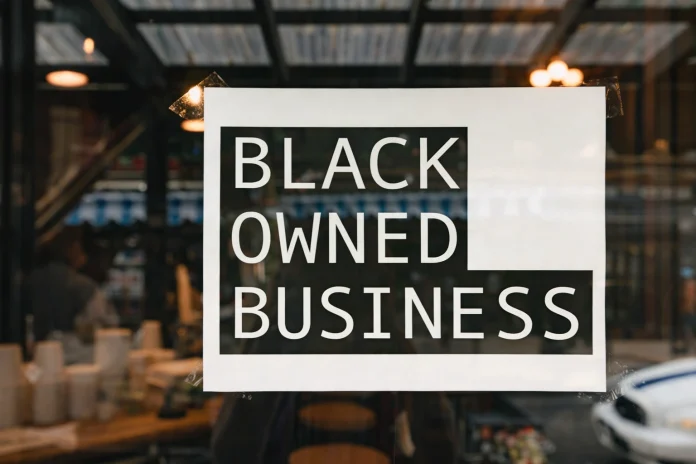
You know what’s wild? We’re living in 2026, and the conversation around black owned businesses has has entirely changed its position as it was but a few years ago. There are no longer the times when support of various entrepreneurs was only a fashionable hashtag in the month of Black History. We are now discussing the serious economic infrastructure, generational wealth creation and the businesses that are transforming whole industries legitimately.
Let me be real with you for a second. The landscape of black owned businesses isn’t just and feel-good stories, I don’t want to hear about any more (but they are good). We are seeing Black entrepreneurs construct billion-dollar products, transform technology, and construct economic ecosystems which are genuinely sustainable. However, here is where no one wants to be honest, there is still a huge disparity in funding, resources, and assistance in relation to their white peers.
buckle up as we are going to find out the actual state of Black entrepreneurship in 2026, what is actually working, and where we still have to get our act together.
The Numbers Don’t Lie (And They’re Pretty Encouraging)
The economic impact of black owned businesses in In 2026, a tipping point has been achieved to an extent that economists are really taking note. In the United States alone we are examining more than 3.2 million Black-owned businesses with an annual revenue of more than 200 billion dollars. People, that is not chump change.
It is here that it becomes interesting. The number of businesses is increasing although the average earnings per business remains below other demographics. Why? The greatest obstacle is access to capital. Only a small amount below 2 percent of venture capital financing is usually given to black entrepreneurs in spite of the fact they are more likely to start a business than any other group.
This disparity in funding is a reality and everyone is paying with it. Research indicates that had the business owned by blacks been given equal opportunities in accessing capital, we would be creating an extra 300 billion dollars injected into the U.S. economy at any one time. That is the type of mathematics that must put every investor on his feet.
Let’s talk about the blueprint. When Rihanna launched Fenty Beauty in 2017, she didn’t just create another makeup line. She created a template for how black owned businesses could dominate a market by actually serving underrepresented customers. The 40 shade foundation line was not a breakthrough since it was confusing but rather a breakthrough since no one was either energetic or it was not known to do it.
Projecting to the year 2026, Fenty Beauty is worth more than 2.8 billion dollars. However, what is more important is that it compelled all other huge cosmetics to diversify their shade or risk being sidelined. That is the type of market interference that we are referring to when Black entrepreneurs receive the resources that they rightfully ought to.
The Fenty effect hit the industries. We observed that in the fashion, hair care, and skincare sector, we found brands that served Black women such as Pattern Beauty by Tracee Ellis Ross and Mented Cosmetics and demonstrated that it was not a niche audience but a gold mine, which no other company wanted to address.
The Tech Revolution You’re Not Hearing About
Here’s something the mainstream tech press won’t tell you: some of the most innovative black owned businesses right now are in the tech sector, and they are not making another app to place an order of overpriced toast.
Examples include companies such as Thrive Global, which was started by Morgan DeBaun or the proliferation of fintech startups that serve banking deserts in primarily Black neighborhoods. These are not charity ventures, they are lucrative businesses that target markets that a conventional company would have deemed too risky (or in other words, the company does not know these customers well).
Black founders in the artificial intelligence industry are designing ethical artificial intelligence solutions that truly take into account algorithmic bias early in the development, rather than discovering it only after their product, by accident, turns out to be racist. Suppose that–creating diversity into technology at the very beginning rather than trying to put it on afterward.
Restaurant and Food Industry Dominance
The food and beverage sector has always been a stronghold for black owned businesses, but this is evolving beyond traditional soul food restaurants (although they are still destroying it, do not misunderstand).
We are discussing Black chefs and food entrepreneurs taking over nice restaurants, fast-casual and technology in food. The restaurant chain of Chef Kwame Onwuachi is growing, and allergens-free snacks are becoming mainstream by such brands as Partake Foods. The frozen food section is finally receiving the type of representation it rightfully deserves, as there are various Black-owned brands fighting to have their spots at large retail establishments.
The artisanal drink sector has gone off. Lots of black-owned breweries, wineries, and distilleries are emerging across the country, and it is breaking the perception that these sectors are white, white, white. Firms such as Uncle Nearest Whiskey and Pronghorn are not only producing great stuff, but they are shifting the narration of the American spirits.
The Fashion Industry Is Finally Catching Up
Fashion has always had a complicated relationship with Black creativity—loving the culture but not always supporting the creators. But black owned businesses in fashion are asserting themselves at the table and constructing their tables in case they are not invited.
Such brands as Fe Noel, Telfar, and Hanifa are reimagining the meaning of luxury and accessibility. The Shopping Bag made by Telfar so popular that it became known as the Bushwick Birkin, and the brand’s democratic approach to luxury (high-quality products but at prices everyone can afford and dropping at set intervals) questioned the exclusivity paradigm that the high fashion industry has been based on.
The same has been experienced in the wedding industry, whereby the Black-owned bridal brands have finally provided brides of color with options other than the poor fitting white dresses, which were meant to fit body types that were totally different. Being represented in this space does not merely mean having a mirror image of you, but having products work in your favor.
Real Estate and Construction: Building Generational Wealth
One of the most critical sectors for black owned businesses is real estate and construction. We are witnessing black developers, contractors, and real estate companies not only construct buildings but also reconstructing communities that were divested in.
Firms are addressing the racial wealth gap directly by creating affordable housing, commercial districts that would serve black enterprises, and mixed-use projects that are beneficial to the communities in which they are constructed. It is not gentrification with a diversity badge on it; it is purposeful development so that longtime inhabitants remain but infrastructure is improved.
Black-owned contractors are progressing to win major municipal contracts in the construction industry, which was traditionally dominated by white-owned firms and is demonstrating their ability to deliver projects on schedule and on budget. Shocking, right? This is almost as though the boundaries were never capability.
The Healthcare Gap and Black Innovation
Healthcare remains one of the most critical areas where black owned businesses are making life-or-death differences. The rates of black maternal mortality remain obscene, and Black-owned health tech firms are coming up with solutions that mainstream medical establishment had neglected.
The community-specific telehealth platforms, medical device manufacturers making tools that can actually read darker skin tones (because apparently, some pulse oximeters had problems with this fundamental operation), wellness brands that cater to the health issues that disproportionately affect the Black communities these businesses are not merely addressing the gaps in the market they are literally saving lives.
The psychological health sector has experienced a massive explosion, with black therapists establishing independent practice and therapy services to meet the special stress-inducing situations and cultural environments Black people experience. Mental health representation is not a performance; it is clinically important.
What Actually Needs to Happen (The Uncomfortable Truth)
Look, celebrating black owned businesses is great. It is beautiful to shop at black Friday and to shop in support of black history month. However, feet to the fire, what supportive action really means in 2026.
To begin with, we have to cease behaving as though the Black consumers are the sole drivers of Black businesses. White business and consumers must walk their diversity statements. You are in the problem when your company is writing about equity and everything one of your vendors is white-owned.
Second, there must be an overhaul of the venture capital and banking industries. The funding disparity statistics is not changing rapidly enough since the individuals that make decisions about investments are still largely male and white and have their own prejudices that they will not admit. This is not solved in algorithmic lending when the algorithms are trained on biased data in the past.
Third, we should cease wanting Black entrepreneurs to be flawless and letting white founders have numerous opportunities to fail. The narrative of the strong black woman or being twice as good to get half as far is tiring and injustice. Black entrepreneurs should also be afforded the same grace time to develop, reposition, and even fail as any other business.
Looking Ahead: The 2026 Vision
The future of black owned businesses isn’t about charity or corporate guilt— it has to do with the understanding that economic marginalization is bad to all. We miss out on the innovations that would have been made by talented entrepreneurs when blocked due to their color when we fail to capitalize on them because of their race, markets, and opportunities.
The businesses that will flourish in 2026 include those that realized this early enough. They have made their supply chains more diverse, invested in Black founders, and created products that serve everyone, rather than just fail to work with a narrow demographic. They realized that inclusion was not a fad but it was good business.
We’re at an inflection point. The Black economic infrastructure is currently being constructed – it could be community investment funds, Black-owned banks, cooperative forms of business, or new policy frameworks. It is not whether or not Black entrepreneurship is going to keep expanding, but rather whether or not the rest of the economy is going to be intelligent enough to ensure that it does so appropriately.
Then the next time someone presents the question of supporting Black businesses, he or she should not be worried about whether he or she is being woke or performative. It is about the things that are excellent, that require equity and acknowledgment that when each person is given a decent opportunity to accumulate wealth, the whole economy will gain. It is not social justice, that is simply economics.

