
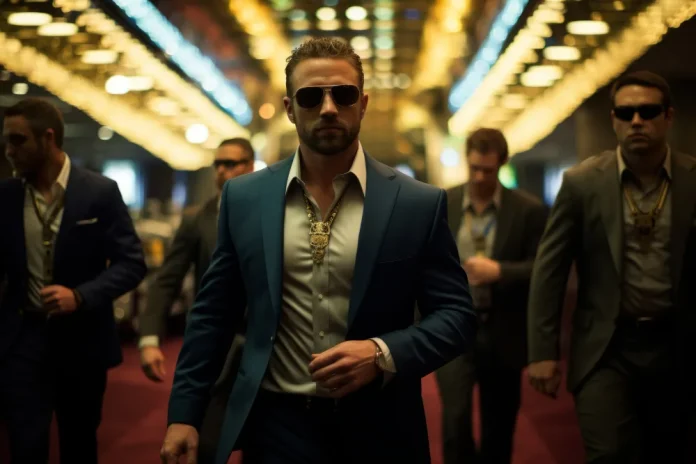
The chances are, that when you consider hip-hop, the first thing that comes to your mind is beats, the bars, and, perhaps, that music video where someone throws money into a club. However, this is where the issue of hip-hop not being just a genre anymore comes in and most people do not discuss it enough. It is a complete economic ecosystem that is brewing more prosperity than the Fortune 500 companies have ever dreamed of. And at the center of it all? And some business brains that are so sharp and yet they rap on the side (at least they did).
Look, I get it. Everyone is accustomed to rappers flaunting their chains and cars on Instagram but the next flex is in boardrooms, investment projects, and deals they are closing that would have Wall Street executives green with envy. The best businessman in hip-hop isn’t just a person with a high-selling record or full arenas. We are talking of empire builders who knew that music was not the start but not the finish.
Now who is really worth that crown? It is time to deconstruct the competitors and enter the actual figures, the actual impact, and the reason why this discussion is a lot more important than you think.
Jay-Z: The Blueprint for Hip-Hop Wealth
If we’re being completely honest here, the conversation about the best businessman in hip-hop pretty much begins and ends with Shawn Carter. Jay-Z did not fall into the world of the rich. He constructed it, one brick at a time, one decision at a time, and with a degree of strategic thinking, which business schools should likely be emulating.
It is just unbelievable in numbers. We are discussing a net worth that has surpassed the billion plus range of net worth, making him not only very rich according to the entertainment bloc but rightfully among the very rich individuals in America. However, this is what makes him stand out among all people: diversity. When other artists satisfied themselves with record contracts and perhaps a line of clothes Jay was purchasing shares in NBA franchises, starting streaming platforms (you remember Tidal?), developing Roc Nation into a one-stop entertainment machine, and even investing in cognac and cannabis.
The Roc Nation Empire
Roc Nation is not a record label only. It is a sports agency of some of the largest athletes in the world. It is a management and touring firm. It’s a publishing house. Jay-Z essentially wrote the history of the traditional model in the music industry and said, why do I have to give all these other people a piece when I can create the infrastructure myself?
And the genius part is that he did it not merely to do it. Roc Nation has turned into a platform where other artists and athletes can use to amass wealth of their own. That would be legacy level thinking.
Dr. Dre: The Beats That Changed Everything
Now, you can’t have a serious conversation about the best businessman in hip-hop without talking about Andre Young. The decision of Beats by Dre to associate with Dr. Dre is likely to be one of the best business ideas of all time in the entertainment industry. Period.
Think about what he did. He borrowed a product (headphones) that was a commodity, as perceived by most people and made it a luxury status symbol. After that, he sold the entire thing to Apple in 2014 that made him $3 billion. Yeah, you read that right. Three. Billion. Dollars. The deal alone was likely to make hip-hop moguls acceptable in Silicon Valley than any other that preceded it.
The beautiful irony? Dre is not a man who was known as a very shrewd businessman prior to that. He had a reputation of making legendary albums and talent discovery. But he knew branding, he knew quality and he knew that people would pay high prices in order to feel a particular way with a certain product. That is marketing genius and business genius.
Diddy: The Original Hip-Hop Mogul
Sean Combs is complicated all the more so with all that has been happening lately. However, when we are telling it as it is in terms of business impact, you cannot delete what this man created. Bad Boy Records. Sean John clothing. Ciroc vodka. Revolt TV. This man was the one who wrote the playbook and everyone was expected to follow it.
Diddy was one of the first to realize that hip-hop was a culture that was going to touch upon nothing less than music. He used to take rappers to suits and runways when that was deemed foolish. He was opening lifestyle brands at the time when people claimed that hip-hop artists could not compete in such areas. You may love him or hate him as a person but you cannot deny him his business vision.
The Ciroc Partnership
The deal with Ciroc is worth special mentioning as it altered the way the endorsement of celebrities functions. Rather than receiving a simple paycheck to endorse a vodka, Diddy struck a profit sharing agreement that is said to reap him eight figures every year. That’s not an endorsement. That’s ownership thinking. That is knowing your worth and bargaining on that.
Rick Ross: The Wingstop King
Here’s someone who doesn’t get enough credit in the best businessman in hip-hop conversation. Rick Ross ventured and purchased Wingstop outlets. Multiple locations. And as we were all laughing at a rapper owning chicken wing restaurants, he was just passively amassing passive income that would not require his next album to fail to release in order to materialize.
That is smart money, that. Franchises are business models that have worked. They are a source of stable cash flow. And Ross realized that diversification was to invest in the business that has nothing to do with his popularity or relevance with music. As much as individuals may cease to be concerned about his music the following day, those Wingstop restaurants will continue to sell wings.
The Business Lesson Nobody’s Teaching
Here’s what strikes me about the best businessman in hip-hop debate: all these guys did something conventional business wisdom says never to do. They used their personal brands on colossal scales, they made colossal risks, and they ventured into industries in which they were not expected to go.
Conventional business wisdom dictates that you need to remain in your lane, do what you are familiar with and develop bit by bit. These hip-hop moguls said forget that. They knew that their cultural impact was a resource that can be taken to the cash in various sectors. They realized that it was even better to be treated as underestimated by the conventional gatekeepers as they had less competition.
The 2026 Landscape
As we move deeper into 2026, the game is changing again. The best businessman in hip-hop going forward won’t just be measured by net worth. It will be about impact, sustainability and how they are utilizing their wealth to provide opportunities to the rest. We are witnessing an increase in the number of rappers-turned-businesspersons that concentrate on tech startups, real estate portfolios, and even venture capital.
Tyler, The Creator is establishing a media empire. Travis Scott is collaborating with large companies in a manner that allows him creative ownership and ownership. These younger artists observed what Jay-Z and others did and they are going even far. They are not waiting till they are 40 to begin to think like businessmen. They are not taking their music careers as a stepping board.
Why This Actually Matters
You may be asking yourself the question; why do we bother knowing who is the richest rapper or who has the best business deals? Fair question. It is important because these success stories are literally redefining who is allowed to create wealth in America.
The road to serious money was in olden times by the old ways, attend the right school, get the right job, work up the corporate ladder, or inherit it. Hip-hop moguls demonstrated that there is the other way. They demonstrated that in case you know culture, in case you are able to create a brand and in case you are ready to make calculated risks, you can create generational wealth through nothing.
That’s not just a music story. That is economic revolution. And regardless of whether you are a hip-hopist or not, the business teachings are cross functional. Develop several sources of income. Protect your intellectual property. Realize that you have a value as influence. Do not allow other people to dictate to you which spaces you can operate in.
The Real Crown
So who actually is the best businessman in hip-hop? In terms of numbers and influence, it would be Jay-Z, and frankly speaking, it is not even a competition. However, what is more interesting to talk about is what follows. Who is making the next Roc Nation? Who will get the next Beats deal? Who is even thinking big enough to make something that will outlive their music career?
Since this is the reality, the game is no longer about being good at something, that is the purpose of GetTheCareer. It is all about knowing how to use what you should be best at to your advantage in various ways. These hip-hop entrepreneurs were already calculating that prior to the establishment of business schools, they had to teach it. They objectified culture and they did it when everybody claimed that it was impossible.
That’s not just good business. That’s visionary thinking. And by 2026 when we are watching the next group of artists establish their empires the template these innovators left behind is going to be the springboard towards even greater heights. The greatest is actually yet to be seen and this is what makes this overall talk so thrilling.

